/5/1/photo_2025-12-07_09-25-35.jpg)
Sayyid Al-Hakeem: Regional Partnerships Advance Stability; Call for Economic Reform Led by Independent Prime Minister
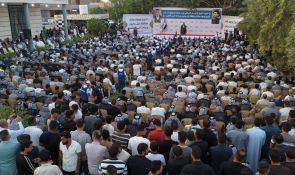
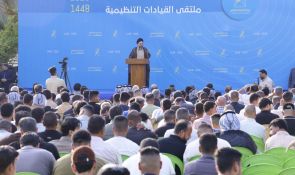
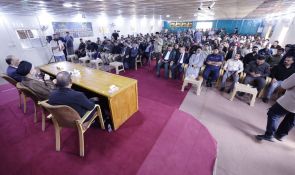
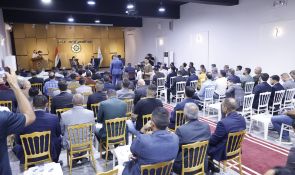
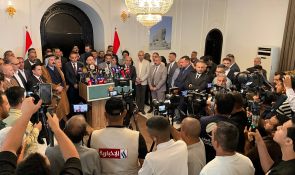
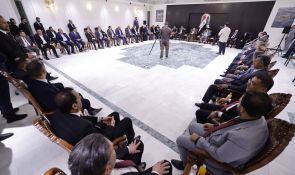
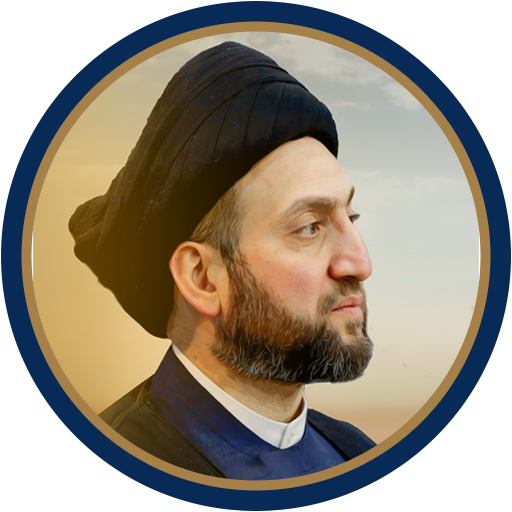
His Eminence Sayyid Al-Hakeem, Head of the National State Powers’ Alliance, affirmed during the seminar titled “Regional Partnerships as a Strategic Pathway to Advance Regional Stability,” held within the First Al-Hakeem International Award Conference, that Iraq’s approach to its regional and international relations is grounded in firm principles centered on national interest, shared benefit, and transforming regional partnerships into a framework that strengthens stability and development across the region.
H.E. highlighted the growing partnership among the region’s key actors—specifically Iraq, Turkey, Saudi Arabia, Iran, and Egypt—explaining that this dynamic is further reinforced through the “6+5” initiative, which brings together the Gulf Cooperation Council states and Jordan. H.E. noted that the initiative seeks to deepen economic and security integration based on the idea that security is interconnected and that economic linkages are essential for sustaining regional stability and aligning the interests of participating states.
H.E. stressed that resolving the Palestinian question remains a central entry point to regional stability, calling for a “win-win” framework in shaping relations among regional states. H.E. emphasized Iraq’s role as a unifying platform rather than a partisan axis, building balanced relations with all sides without alignment or bias. H.E. pointed to Iraq’s active efforts in facilitating dialogue between regional actors—including the Iranian–Saudi talks and other initiatives that helped ease tensions and open calmer diplomatic channels.
H.E. stated that the growing strength of the Iraqi state has contributed to a noticeable reduction in external interference compared to previous phases, and that Iraq is increasingly operating based on its own internal decision-making. H.E. explained that this shift is supported by expanding regional and international confidence in Iraq’s balanced role within its Arab and Islamic environment—a role that avoids entering conflicts and instead seeks to contribute to their resolution in support of stability.
H.E. further emphasized that building sustainable relations is not limited to official tracks alone, but also includes engagement among political and intellectual elites across the region. This parallel channel, H.E. noted, strengthens understanding, removes misconceptions, and expands areas of mutual trust. H.E. added that societies are broader than governments, and that cultural and popular relations have become essential components in shaping regional equilibrium.
On the economic front, H.E. called for integrating interests across security, politics, economics, and culture rather than treating them separately. H.E. underlined the need for steady exchanges of reassurance to partners and for building genuine trust that can overcome accumulated doubts through continuous dialogue that does not halt at disagreements.
H.E. also underscored the importance of using surveys and scientific research to understand public opinion trends and to inform public policy in ways that strengthen coordination between decision-makers, the public, and research institutions, ensuring that policies are realistic and implementable.
Concluding the session, H.E. noted that Iraq began after 2003 from below zero due to wars and the destruction of its infrastructure. H.E. stated that this demands gradual economic reform based on empowering the private sector, rationalizing spending, and transitioning from a line-item budget to a program-based one. H.E. called for the next Prime Minister to be politically independent—or to freeze party affiliation during the assignment period—to ensure reforms are implemented free from partisan and electoral pressure, placing Iraq’s interests above all other considerations.