/24/2/photo_2025-10-25_09-45-48.jpg)
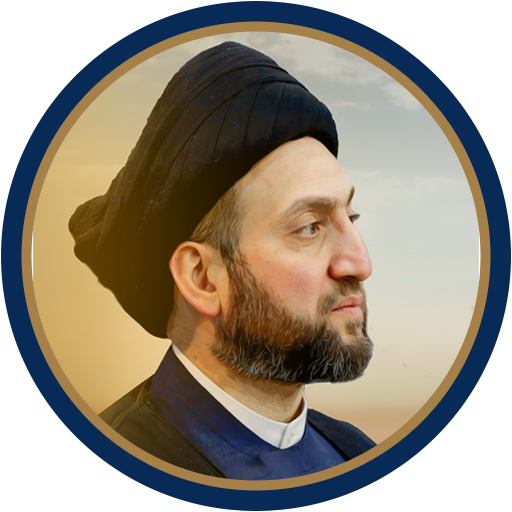
Sayyid Al-Hakeem from Diyala Calls for Fair Competition, Rejects Political Money, Electoral Pressure
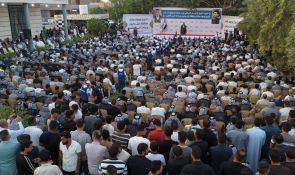
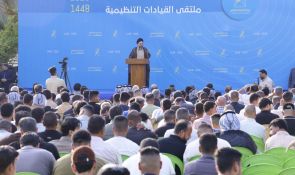
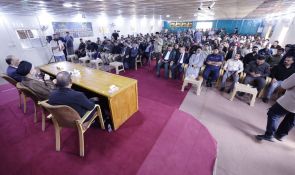
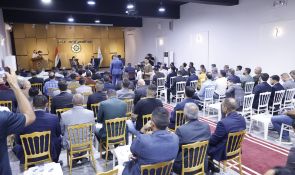
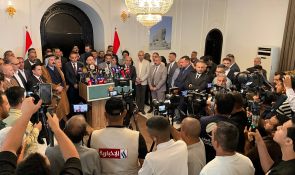
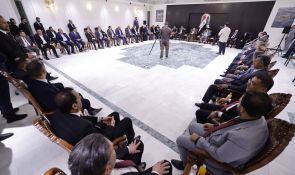
During a large electoral gathering for supporters of the National State Powers Alliance in Diyala Governorate—the province of diversity, the capital of oranges, and the city of sacrifice, devotion, martyrdom, and Iraqi patriotism—Sayyid Ammar Al-Hakeem, Head of the National State Powers Alliance, paid tribute to the great sacrifices made by Diyala and Iraq, recalling the difficult times the province endured. His Eminence noted that Diyala now enjoys security and stability by Allah’s grace, through the guidance of the supreme religious authority, and thanks to the sacrifices of its loyal sons, as well as the efforts of the security forces and the Popular Mobilization Forces.
H.E. emphasized that the combination of religious authority and tribal leadership has been a cornerstone in preserving Iraq during critical historical moments, serving as a source of strength and blessing. Recalling the security challenges of the past, H.E. stated that the Ba’ath regime had conspired with terrorism to undermine Iraq’s national project, most clearly manifested during the ISIS crisis. H.E. stressed that the former regime was complicit in Iraqi bloodshed before and after 2003, noting that reports have proven that the defensive jihad fatwa overturned the terrorist agenda and rallied the tribes, breaking the barrier of fear. This, H.E. added, made the religious authority the safeguard of Iraq’s unity and a shield against destructive schemes.
Addressing the crowd, H.E. said, “Your state, your achievements, your moderation, and your stability—do not waste them. They reflect a truly national stance in the face of Iraq’s challenges.” H.E. emphasized that Iraq stands at a crossroads and faces decisive elections that can lay the foundation for a new and stable phase—if citizens choose to participate widely, consciously, and responsibly—ensuring the rights of both participants and boycotters alike.
H.E. called for fair and honorable competition, rejecting narrow or personal interests that compromise national unity. H.E. warned against the use of political money, the buying of loyalty, and the exploitation of state resources to favor specific groups. H.E. also condemned any form of voter coercion or unethical campaigning through defamation or false accusations, affirming that electoral security requires protecting candidates’ reputations, campaign events, and voters’ freedom to express their convictions without intimidation.
H.E. placed responsibility on the Electoral Commission to safeguard voters’ voices and will, urging political blocs to define the priorities of the coming stage. H.E. reaffirmed that the National State Powers Alliance aims to strengthen and consolidate political stability, as it paves the way for security, economic prosperity, and public satisfaction—ultimately leading to a united, strong, independent, stable, and just Iraq.
H.E. explained that achieving this vision requires reassuring both domestic and regional partners, stressing that Iraq belongs to all Iraqis and is not exclusive to any sect or group. H.E. added that each component bears responsibility and gains according to its role and weight, calling on the majority component to reassure others, and on the remaining components to respect the size and role of the majority. H.E. underscored the importance of fostering trust, goodwill, and reassurance both within Iraq and toward the region and the world.
Turning to the economic file, H.E. stated that economic reform begins with agricultural reform—addressing water scarcity and management, ensuring the provision of fertilizers, seeds, pesticides, and fair pricing, and supporting farmers and their products against imported goods. H.E. also highlighted the need to strengthen local industries, noting Diyala’s long industrial legacy, while stressing the importance of electricity supply, soft loans, private sector support, and taxation on imported goods.
H.E. further called for revitalizing the tourism sector, describing Iraq as a country rich in archaeological, religious, and natural tourism resources. H.E. urged investment promotion and capital attraction—both domestic and foreign—through legislative reforms and streamlined procedures. H.E. emphasized the adoption of governance, technology, and artificial intelligence to create job opportunities and safeguard public funds.
H.E. outlined that the top service priorities are water, electricity, healthcare, education, and infrastructure, alongside the preservation of social, religious, and national values. H.E. called for strengthening Iraq’s regional and international relations, promoting openness and balance as key drivers of national progress.
In conclusion, H.E. reaffirmed support for empowering young people, urging citizens to vote for the National State Powers Alliance candidates who represent Iraq’s vibrant social mosaic in Diyala Governorate.