/22/1/photo_2025-10-22_14-26-07.jpg)
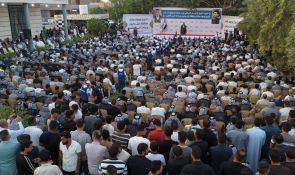
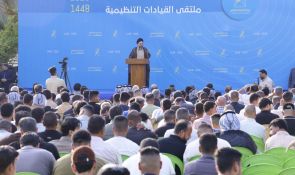
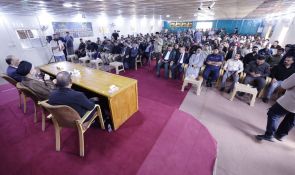
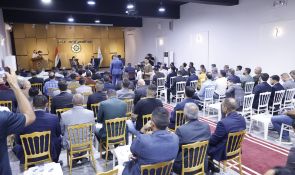
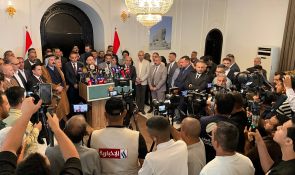
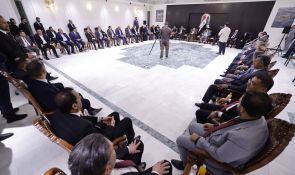
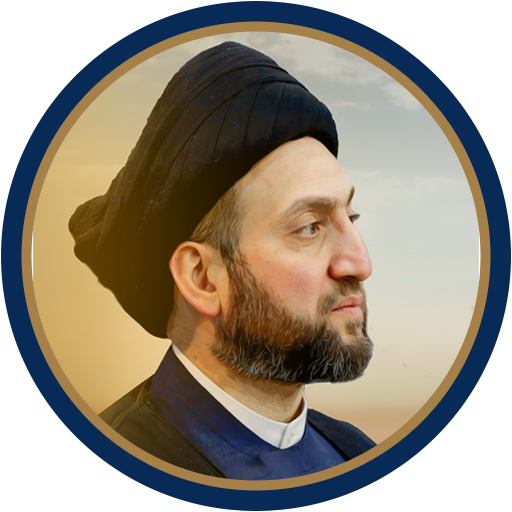
Sayyid Al-Hakeem at the Iraq Youth Forum: Calls for National Majority, Active Youth Participation in Political Decision-Making
During his participation in the fifth edition of the Iraq Youth Forum, Sayyid Ammar Al-Hakeem, Head of the National State Powers Alliance, emphasized that Iraq is a country of diversity—its strength lies in building on shared values and resolving differences through dialogue and understanding. H.E. noted that Al-Hikma Movement strives to remain close to all Iraqis, listening to diverse voices while maintaining internal inclusivity, making it a truly national current that welcomes everyone.
H.E. explained that Al-Hikma Movement was founded in 2017 to represent the youth and engage with them directly. The movement, led largely by young figures, identifies and nurtures individual talents, providing training and opportunities that lead to empowerment, followed by evaluation and constructive guidance.
H.E. stressed that Al-Hikma rejects the notion of breaking wills, upholds the responsibilities of democracy, and believes in dialogue with those who hold differing opinions. True democracy, H.E. affirmed, is built on engagement and discussion, warning against isolationist attitudes that suppress free expression.
Touching on Iraq’s political system, H.E. explained that the parliamentary model allows for broad participation but poses challenges in decision-making, while a presidential system offers decisiveness but entails greater accountability. H.E. renewed the call for two broad alliances that include representatives of all communities—transcending sectarian, ethnic, or nationalist divisions—so that citizens can judge candidates based on their programs and performance rather than identity politics.
H.E. reiterated that participation in governance and opposition are the twin pillars of democracy, saying, “Iraq cannot progress through a purely political majority—it needs a national majority.” H.E. underscored that the realistic approach lies in the presence of all components, mutual respect, and prioritizing national unity.
H.E. also noted that Al-Hikma Movement paid a price for maintaining a moderate and centrist discourse during times of political tension and populist rhetoric, but today, the voice of moderation is regaining ground. H.E. stressed that successful national projects will ultimately outlast temporary and fragmented ones, as a strong state guarantees rights for all.
H.E. renewed his call for “religion to guide politics, not for politics to exploit religion,” affirming that politics should embody ethics, honesty, and truthfulness. H.E. cautioned against those who claim guardianship over religion to impose their will, reminding that personal mistakes belong to individuals, not faith itself.
H.E. also spoke about his recent visit to the Islamic Republic of Iran, where discussions centered on Iraq-Iran relations, regional issues, and the recent war. H.E. noted that Iraq approached regional crises with balance—offering political, humanitarian, and media support while avoiding entanglement—and continued to stand by the Lebanese and Palestinian peoples.
H.E. further highlighted that the growing presence of foreign companies and positive international engagement with Iraq are indicators of Iraq’s emerging stability and constructive role in the region—achievements made possible through moderation by both the government and political forces. However, H.E. described the current phase as one of “fragile stability,” expecting the upcoming elections to usher in a new era of sustainable stability.
H.E. emphasized that the formation of the next government and the selection of the three presidencies will depend on political consensus shaped by the election results, calling for scientific and merit-based standards in choosing future leaders—grounded in clear programs and commitments.
Concluding his remarks, H.E. reaffirmed that Iraq’s constitution envisions a civil state that respects Islamic principles, explaining that Islam itself embraces diversity and upholds freedom of religious expression. H.E. noted that efforts were made to encourage the Sadrist Movement to participate in the elections, respecting its decision not to, but once again urged for broad participation to safeguard the rights of both voters and boycotters alike.
H.E. also called for the active inclusion of youth in the political process, recalling his proposal to lower the eligibility age for parliamentary elections to 25. H.E. offered advice to young participants in politics, urging them to exercise patience, persevere, and steadily build their experience.