/11/2/photo_2025-10-12_10-10-54.jpg)
ءSayyid Al-Hakeem Stresses Responsible Media Role to Support Democracy, Calls for Legislative Modernization, Strengthening Digital Sovereignty
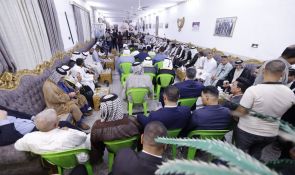
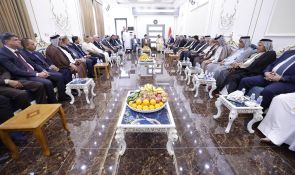
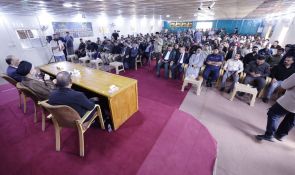
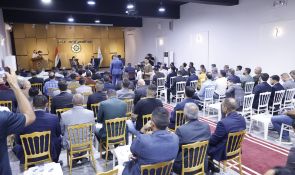
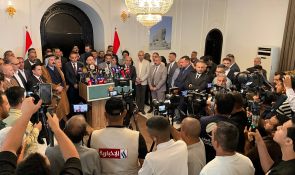
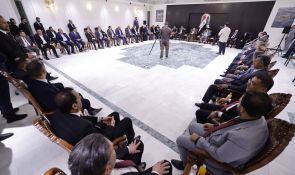
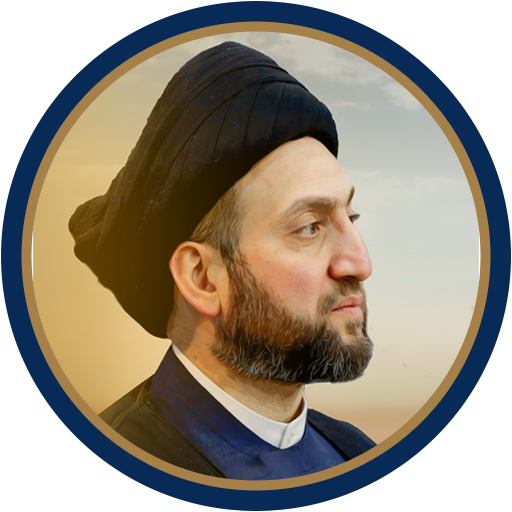
Sayyid Al-Hakeem, Head of the National State Powers' Alliance, met with several leaders of governmental and professional media institutions, in the presence of the heads of the Communications and Media Commission and the Iraqi Media Network, as well as the chairpersons of the Boards of Commissioners and Trustees, the Head of the Iraqi Journalists Syndicate, the Chairman of the Council of Deans of Media Colleges at the Ministry of Higher Education, and the Head of the Security Media Cell in the Joint Operations Command.
During the meeting, His Eminence emphasized the importance of comprehensive media planning for the upcoming parliamentary elections and the need to safeguard such plans from external influence. H.E. highlighted the essential role of informed media oversight in strengthening the democratic process and ensuring that its true image is conveyed to Iraqi voters and to regional and international audiences.
H.E. pointed to the urgent need to draft and refine new media legislation that reflects rapid global developments and addresses the ambiguities and shortcomings of the existing law, which dates back to the 1970s.
H.E. further underlined the importance of upholding full sovereignty over communication networks, digital gateways, and cybersecurity systems to support the efforts of official and security institutions in regulating the digital space. This, H.E. noted, should preserve social cohesion, protect freedom of expression, and modernize strategic methods to counter misinformation and safeguard family and societal environments, treating these efforts as key pillars of national security.
H.E. reaffirmed the importance of promoting positive messaging, encouraging relevant institutions to build and sustain it, and supporting both national and governmental achievements while highlighting Iraqi talents at home and abroad. H.E. also called for greater coherence among government statements by unifying overlapping communications, empowering and training institutional staff, and creating a professional environment for spokespersons, analysts, and communicators, backed by qualified experts to ensure a balanced and national narrative.
H.E. urged stronger support for academic media programs in Iraqi universities, emphasizing the importance of continuous intellectual exchange to ensure well-prepared graduates grounded in structured and state-aligned theoretical frameworks. H.E. also called for allocating necessary funds to equip media and technical laboratories and update curricula to keep pace with technological and media advancements. H.E. stressed the need to protect journalists’ rights and freedoms by implementing existing regulations that guarantee their right to work and access information, while maintaining respect for the state’s authority and its religious and societal symbols, and to promote the media’s constructive role in reinforcing the foundations of a modern, just, and strong state.