/30/12/photo_2025-04-30_23-31-24.jpg)
Sayyid Al-Hakeem from Anbar: Iraq Undergoes National Recovery, Stability, We Must Consolidate Gains, Transition to Diversified Economy
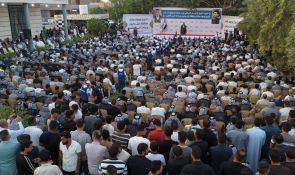
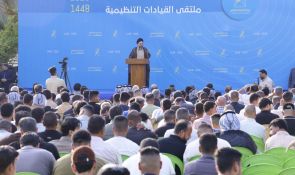
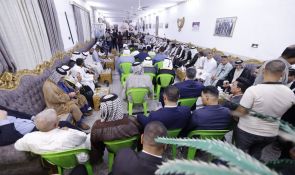
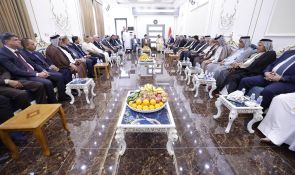
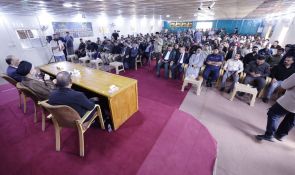
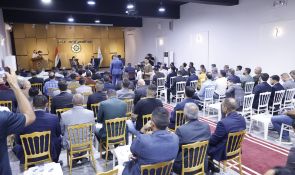
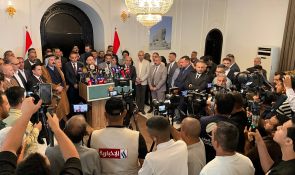
Sayyid Ammar Al-Hakeem, Head of the National State Powers Alliance, concluded the first day of his tour in Anbar Province by meeting with a group of the province’s professionals and experts, in the presence of Anbar Governor Mr. Mohammed Nouri Al-Dulaimi and Provincial Council Chairman Engineer Omar Mishaan Dabbous.
In his address, Sayyid Al-Hakeem expressed his delight at visiting Anbar and witnessing firsthand the province’s remarkable progress in reconstruction, development, and stability, affirming that Iraq as a whole has become a vast workshop, with most provinces undergoing noticeable transformation.
His Eminence noted that Iraq is currently experiencing a phase of political and social recovery, pointing to the existence of clear frameworks for managing differences through the State Administration Coalition. H.E. added that sectarian sensitivities have notably diminished, giving way to social integration and genuine coexistence among all Iraqis.
H.E. emphasized the need to reinforce and build upon this positive atmosphere, transforming it into a widespread national sentiment. H.E. stressed that this is a top national priority—alongside the urgent need to break free from a rentier economic model by diversifying sources of national income through agriculture, industry, tourism, technology, and investment.
Turning to emerging social challenges, such as drug abuse and rising divorce rates, H.E. stated that addressing these issues is a collective responsibility that requires solidarity from all segments of society. H.E. underlined that Iraq is entering a new phase that demands readiness for major upcoming obligations.
Reiterating that his visit to Anbar is purely social and unrelated to any political or electoral agenda, H.E. explained that direct communication fosters social cohesion and helps align visions for the country’s future.
On the topic of national identity, Sayyid Al-Hakeem rejected the notion of abandoning sub-identities, stating, “The safest path to a unified national identity lies in respecting individual identities within a broader national framework—this is in harmony with natural human instinct.”
H.E. also spoke of Anbar’s strategic significance—its geography, natural resources, and pivotal location on Iraq’s borders—calling for a deep reading of the governorate’s historical role in preserving Iraq’s unity and serving as a source of both sustenance and defense.
Discussing the “Our Resilient Anbar” initiative, H.E. explained that it was introduced during a highly sensitive security period to curb the spread of terrorism. H.E. expressed regret over the defamation and misrepresentation the initiative faced, despite the fact that its objectives were later validated by reality.
H.E. firmly rejected the use of sectarian or ethnic rhetoric in electoral campaigns, calling for competition to be based on policy platforms and urging voters to hold accountable those who resort to divisive language by rejecting them at the ballot box.
In foreign policy, H.E. called for a balanced approach rooted in “neither underestimation nor exaggeration,” and praised Iraq’s current stance in navigating regional challenges. H.E. highlighted the importance of adopting a position of positive neutrality in international relations.
Concluding his remarks, Sayyid Al-Hakeem stressed the importance of shielding youth from sectarian discourse through education and curricula reform. H.E. advocated for empowering young people intellectually and culturally, citing the Al-Hikma Movement’s experience in supporting youth. H.E. affirmed that intellectual fortification is the key to building a stable and secure future.