/30/7/photo_2025-04-30_17-13-41.jpg)
Sayyid Al-Hakeem from the Al-Bu Dhiyab Tribe’s Guesthouse: Our Unity Is Our Strength, and Sectarianism Is a Fading Commodity
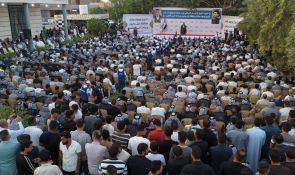
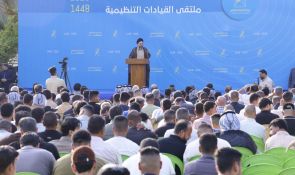
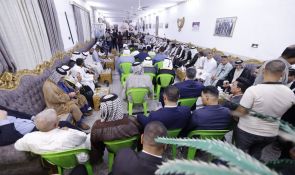
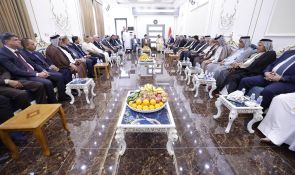
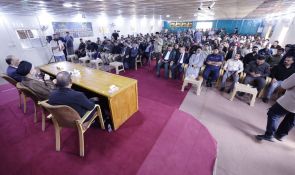
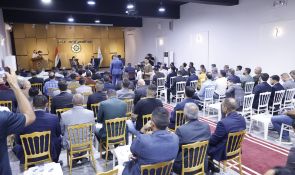
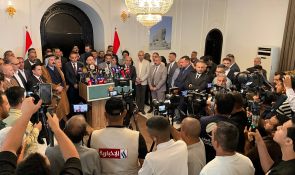
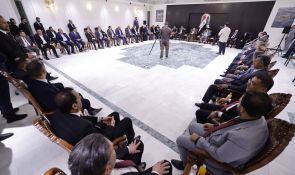
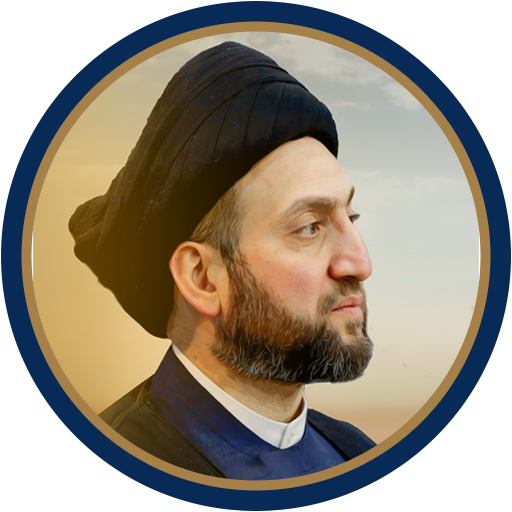
As part of the ongoing tour in Anbar Province, Sayyid Ammar Al-Hakeem, Head of the National State Powers’ Alliance, visited the guesthouse of the noble Al-Bu Dhiyab tribe, hosted by Sheikh Hamid Al-Shawka. His Eminence met with a number of tribal sheikhs and dignitaries from Anbar, recalling the bonds of brotherhood shared with the people of the province and his previous visits—especially the widely welcomed 2007 visit, despite the difficult circumstances at that time. H.E. affirmed that sectarianism has always been a political phenomenon rather than a social one.
H.E. explained that some parties continue to exploit sectarian rhetoric to gain votes, calling for the rejection of such practices and for conscious participation in elections. H.E. urged voters to oppose extremist discourse by withholding votes from those who promote it, noting that sectarianism will die out once it becomes an unmarketable product.
H.E. stated that Iraq is currently witnessing tangible positive transformations, describing the country as a true workshop of development—something evident during recent provincial tours. H.E. praised the societal coexistence, security, stability, and urban growth in Anbar.
H.E. encouraged promoting these positive developments to strengthen hope and optimism among citizens, stressing that national unity remains the key source of strength. H.E. affirmed that the upcoming elections will take place in a calm and cohesive atmosphere, further underscoring the importance of wide participation and the selection of competent representatives.
H.E. also emphasized the need to address the legacies of the past, to compensate victims of terrorism, and to ensure that the innocent do not continue to pay the price for the actions of opportunists. H.E. confirmed personal commitment to following up on this issue.
In conclusion, H.E. highlighted the importance of viewing financial scarcity as an opportunity for deep economic reform—including diversifying income sources and moving away from a rentier economy. H.E. warned that Iraq’s heavy reliance on oil exposes the country to significant risk, and that real reform lies in adopting a comprehensive development strategy to secure the nation’s future.