/27/1/photo_2025-03-28_01-29-47.jpg)
Sayyid Al-Hakeem Delivers Ramadan Lecture on "Right of Prayer" in Epistle on Rights by Imam Al-Sajjad (PBUH)
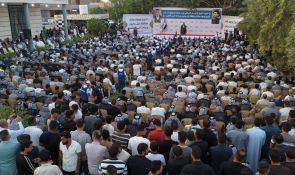
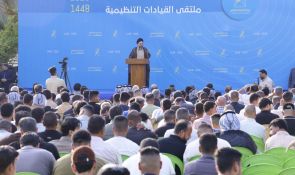
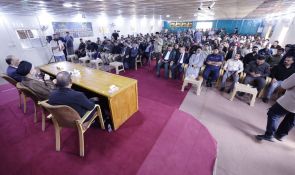
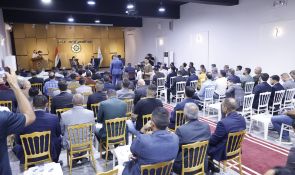
As part of his ongoing Ramadan lecture series, Sayyid Ammar Al-Hakeem, Head of the National State Powers Alliance, continued his reflections on the "Right of Prayer" as outlined in the renowned Epistle on Rights by Imam Ali ibn Al-Hussein Al-Sajjad (peace be upon him). In this week’s lecture, H.E. focused on two significant dimensions of prayer: Wilayah (Divinely Ordained Guardianship) and Tarbiyah (Spiritual Nurturing).
H.E. emphasized that Wilayah stands as one of the most profound outcomes of sincere prayer, citing the verse from Surah Al-Ma’idah (verse 69), which underscores allegiance and dissociation (Tawalli and Tabarri) as fundamental pillars of faith. H.E. explained how the Qur’anic methodology encourages individuals to assess and internalize these concepts on their own, thereby deepening their understanding and enhancing their spiritual awareness. He also pointed to the strong connection between prayer and charity in this verse, stressing that acts of goodness should persist even during the performance of prayer.
Shifting to the thirteenth effect, H.E. addressed the role of Tarbiyah—moral and spiritual upbringing—within the framework of prayer. Drawing from Surah Maryam, H.E. reflected on the example of Prophet Ismail (peace be upon him), who was commended for urging his household to uphold prayer and charity. H.E. further highlighted the importance of fulfilling promises, identifying this as a key trait of prophets and messengers and a quality that believers should strive to emulate.
H.E. also underscored the essential role of guidance and awareness in spiritual upbringing. He stressed that recitation of the Qur’an and regular prayer should form the foundation of sound moral development, as both serve to protect the soul from immorality and wrongdoing. He illustrated how the detailed practices of prayer help instill discipline, elevate piety, and cultivate righteous character.
Concluding the lecture, H.E. urged believers to embody the true essence of prayer in their daily lives, regarding it not only as a spiritual obligation but also as a means of personal growth and societal upliftment—one that steers individuals away from corruption and vice.