/23/1/photo_2025-03-24_14-54-59.jpg)
Sayyid Al-Hakeem: Forgiveness and the Qualities of Righteous Scholars in Light of the Effects of Prayer
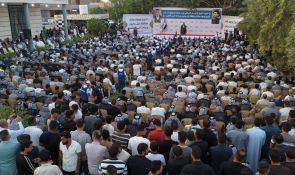
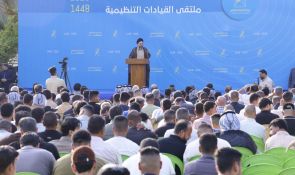
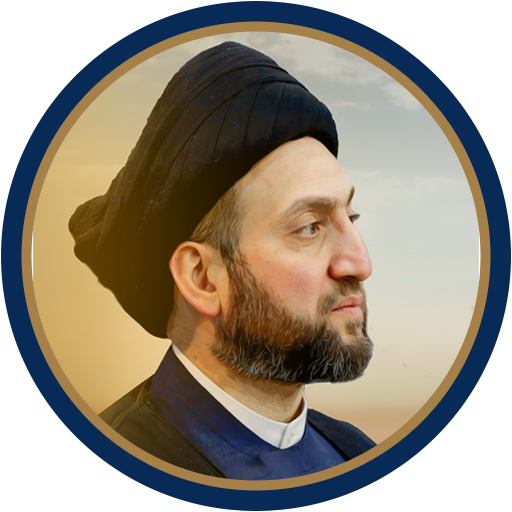
As part of his ongoing discussion on the Epistle on Rights by Imam Ali bin Al-Hussein, Al-Sajjad (peace be upon him), Sayyid Ammar Al-Hakeem, Head of the National State Powers Alliance, continued his Ramadan lectures on the tenth right concerning prayer. In this session, His Eminence explored the effects of prayer, particularly its role in attaining divine forgiveness, citing Quranic evidence that underscores its significance.
Sayyid Al-Hakeem reflected on the following Quranic verse:
"Only those fear Allah, among His servants, who have knowledge. Indeed, Allah is Almighty, Most Forgiving. Indeed, those who recite the Book of Allah, establish prayer, and spend from what We have provided them, secretly and publicly, hope for a trade that will never perish." (35:28 Holy Quran)
H.E. elaborated on the deep meanings embedded in this verse, emphasizing that true knowledge leads to reverence for Allah, prayer, and charitable giving. H.E. clarified that the term scholar in the Quran is not limited to those who possess knowledge but also includes those who internalize it, attain wisdom, and align their actions with their understanding.
Commenting further, Sayyid Al-Hakeem referenced the teachings of Imam Ali (peace be upon him) and the Imams of Ahl Al-Bayt (peace be upon them) regarding the attributes of righteous scholars. H.E. quoted Imam Ali (peace be upon him):
"Shall I inform you of the true jurist? It is the one who does not drive people to despair of Allah’s mercy, nor make them feel secure from His punishment..."
H.E. emphasized that knowledge holds no value unless accompanied by action and deep reflection on the Quran. H.E. stressed the importance of worship that is rooted in understanding and contemplation.
Sayyid Al-Hakeem further examined prophetic traditions highlighting the qualities of righteous scholars, such as fear of Allah, commitment to prayer, and giving in charity. H.E. noted that a believer’s worship balances awe of Allah with hope in His mercy and that reciting the Quran should be a continuous and daily practice.
H.E. also underscored the significance of both private and public charity—where private giving reflects sincerity, while public giving encourages others to contribute. H.E. reiterated that engaging in trade with Allah never fails, as He values and accepts sincere offerings.
Concluding his lecture, Sayyid Al-Hakeem emphasized that appreciating the efforts of others and forgiving their mistakes is a vital Quranic principle that believers should embody in their daily lives.