/22/1/photo_2025-03-24_14-48-03.jpg)
Ramadan Lecture by Sayyid Al-Hakeem: Forgiveness and the Effects of Prayer in the Holy Quran
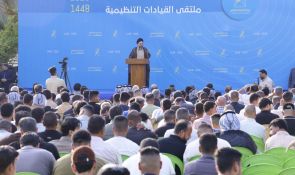
In his Ramadan lecture, Sayyid Ammar Al-Hakeem, Head of the National State Powers Alliance, continued his discussion on the effects of prayer as outlined in the Epistle on Rights by Imam Ali bin Al-Hussein, Al-Sajjad (peace be upon him). His Eminence elaborated on the tenth right concerning prayer and its connection to divine forgiveness, emphasizing that performing prayer with its proper conditions leads to Allah’s mercy and pardon.
Sayyid Al-Hakeem highlighted Quranic verses that affirm the role of prayer in attaining forgiveness and divine mercy, including:
"Indeed, Allah took a covenant from the Children of Israel, and We appointed twelve leaders among them. And Allah said, 'I am with you. If you establish prayer, give zakat, believe in My messengers, support them, and lend Allah a good loan, I will surely absolve you of your misdeeds and admit you into gardens beneath which rivers flow. But whoever among you disbelieves after this has certainly strayed from the right path.'" (5:12 Holy Quran)
Commenting on this verse, Sayyid Al-Hakeem underscored the significance of prayer, zakat, faith in divine messages, and supporting prophets as fundamental pillars for attaining forgiveness and entering paradise. H.E. also noted the symbolic importance of the number twelve in the Quran and divine religions. Furthermore, H.E. explained that a “good loan” should come from lawful earnings, given with sincere intent for Allah, without delay or expectation of return, in line with the noble principles of generosity.
H.E. also referenced another verse on forgiveness:
"But if they repent, establish prayer, and give zakat, then let them go their way. Indeed, Allah is All-Forgiving, Most Merciful." (9:5 Holy Quran)
Sayyid Al-Hakeem stressed that true repentance must be accompanied by righteous deeds and that faith manifests clearly through the observance of prayer and zakat.
Concluding his lecture, Sayyid Al-Hakeem called for embracing the culture of accepting others’ repentance once they acknowledge their mistakes, highlighting that the ultimate purpose of repentance is guidance and piety. H.E. emphasized that actions are judged by their outcomes, as a person may fall into disbelief even after embracing faith, a reality affirmed by Quranic verses.
Sayyid Ammar Al-Hakeem continued his Ramadan lecture by reflecting on how prayer shapes a human’s life, reaffirming its significance as a fundamental pillar of Islam that strengthens one’s connection with Allah and leads to divine forgiveness.