/19/1/photo_2025-03-20_09-19-07.jpg)
Sayyid Al-Hakeem Examines Prayer’s Effects in Holy Quran Durin Ramadan Discourse
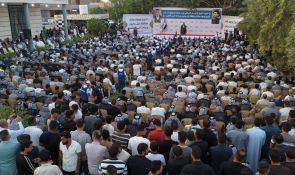
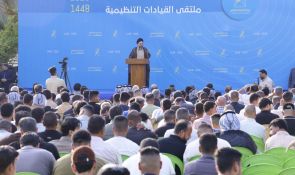
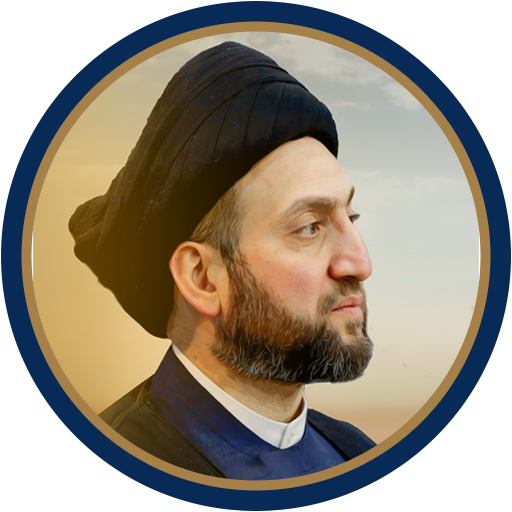
During his daily Ramadan lecture, Sayyid Ammar Al-Hakeem, Head of the National State Powers Alliance, further elaborated on prayer's transformative effects as presented in the Holy Quran, particularly regarding the tenth right in Imam Zayn Al-Abidin's (peace be upon him) seminal work. His Eminence systematically analyzed key Quranic verses that establish prayer's central role in spiritual development.
Focusing first on Surah Luqman, Sayyid Al-Hakeem demonstrated how divine guidance operates through divinely-inspired wisdom, with prayer and charity serving as complementary spiritual and material channels. H.E. highlighted the Quran's consistent pairing of these twin obligations, noting how prayer elevates the soul while charity rectifies worldly conditions - the latter encompassing broader social responsibilities beyond its technical definition.
Addressing Surah Al-Alaq, H.E. critiqued the spiritual dangers of power, wealth and knowledge when divorced from humility, contrasting such arrogance with prophets like Solomon and Joseph (peace be upon them) who maintained devotion despite their privileges. Sayyid Al-Hakeem particularly emphasized how the Quran's deliberate anonymity regarding those who prevent prayer underscores Islam's principle-centered rather than personality-focused approach to righteousness.
In his concluding remarks, Sayyid Ammar Al-Hakeem called for maintaining prayer as the foundation of spiritual growth while fulfilling material obligations through charity, presenting this balanced approach as the Quran's comprehensive formula for human fulfillment. H.E. reaffirmed that consistent prayer remains the believer's most powerful antidote to worldly distractions and the surest path to divine mercy.