/16/1/photo_2025-03-17_09-37-49.jpg)
Sayyid Al-Hakeem Continues Explaining the Epistle of Rights in Ramadan Lecture, Discussing Obstacles to Prayer and Its Effects
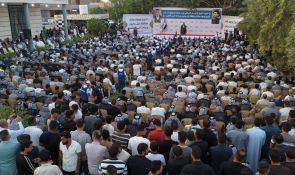
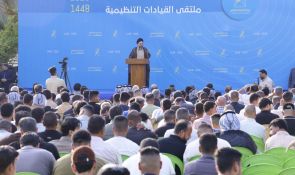
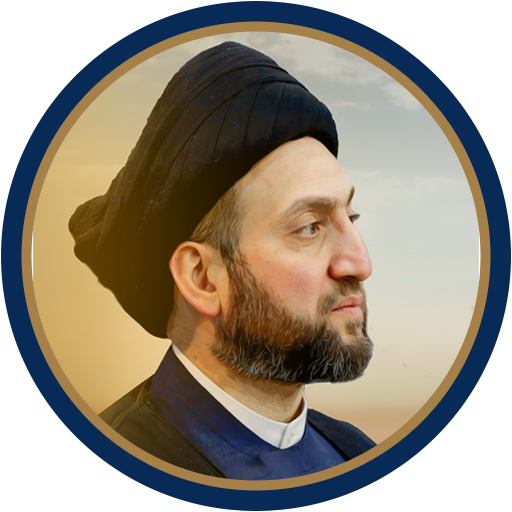
At the beginning of his Ramadan lecture today, Sayyid Ammar Al-Hakeem, Head of the National State Powers Alliance, congratulated the auspicious birth of the beloved grandson of the Prophet, Imam Hasan Al-Mujtaba (PBUH), and continued his explanation of the Message of Rights by Imam Ali Ibn Al-Hussein, Al-Sajjad (PBUH). H.E. focused on the tenth right related to prayer, addressing the obstacles to prayer and its effects.
Sayyid Al-Hakeem began by discussing the barriers to prayer, having previously covered five key obstacles. H.E. continued with further ones based on authentic Hadiths, including:
• Backbiting, which invalidates the acceptance of prayer. The Prophet (PBUH) said: "Whoever backbites a Muslim, their prayer and fasting will not be accepted by Allah for forty days and nights, unless the one they backbit forgives."
• Disrespecting parents, as Imam Ja'far Al-Sadiq (PBUH) mentioned: "Whoever looks at their parents with contempt, while they are unjust to him, Allah will not accept his prayer."
H.E. also covered other barriers such as a runaway slave, a wife who is disobedient to her husband, denying zakat, adultery, and intoxication, explaining that prayers from such individuals will not be accepted unless they repent.
In the eighth section, H.E. discussed the effects of prayer, affirming that it is a key to piety and faith. H.E. explained that offering prayer according to its conditions places the worshiper in the circle of the pious and believers. H.E. referred to verses that link prayer with piety and faith, such as:
"This is the Book, there is no doubt in it, a guidance for the pious." (2:2 Holy Quran)
"Those who establish prayer and spend from what We have provided them." (3:8 Holy Quran)
H.E. Al-Hakeem also highlighted the importance of prayer in personal and social reform, emphasizing that those who perform prayer work on reforming themselves and society, and they are among the reformers who are promised reward from Allah.
H.E. concluded his lecture by stressing the need to uphold prayer as a key tool for achieving piety, faith, and reform in our daily lives, urging everyone to adhere to the great teachings of Islam in both its spiritual and moral aspects.