/11/photo_2025-03-12_09-27-36.jpg)
Sayyid Al-Hakeem in His Ramadan Lecture: Warning Against Disregarding Prayer and Call for Humility in Worship
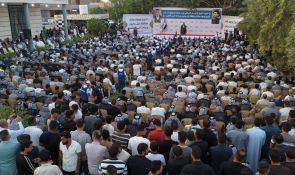
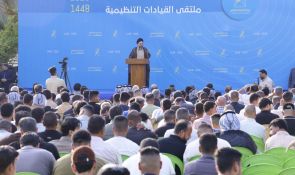
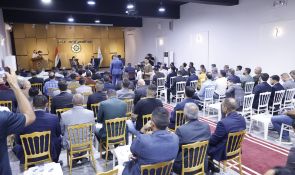
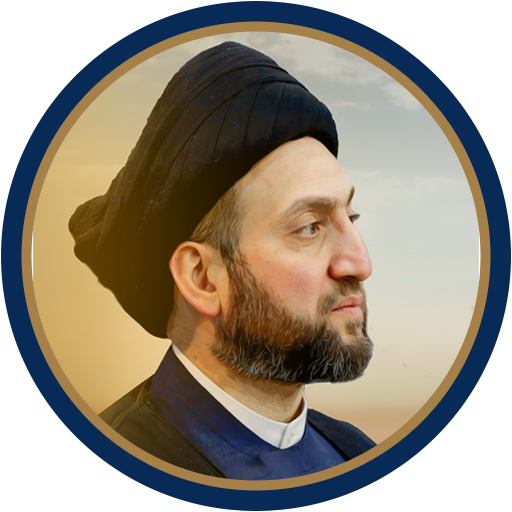
Continuing his Ramadan lectures, Sayyid Ammar Al-Hakeem, Head of the National State Powers Alliance, resumed his discussion on the tenth right from the Epistle on Rights of Imam Ali bin Al-Hussein Zayn Al-Abidin (peace be upon him), focusing on the topic of neglecting prayer. In this lecture, Sayyid Al-Hakeem emphasized the importance of adhering to prayer and the prohibition of taking it lightly, clarifying that it is one of the most vital duties Prophet Mohammed (peace be upon him) emphasized in his final moments.
Sayyid Al-Hakeem cited various noble traditions warning against neglecting or performing prayer incorrectly. H.E. quoted Imam Al-Sadiq (peace be upon him), who cautioned against neglecting prayer or failing to perform it properly, stressing the need for moderation and attention to all its pillars. H.E. also referenced a warning from the Prophet (peace be upon him) about certain forms of negligence in worship, such as the "theft of prayer," which results in the loss of its reward.
In the fifth part of his lecture, Sayyid Al-Hakeem shifted to the topic of mindfulness during prayer, affirming that the soul and essence of prayer lie in complete devotion to Allah Almighty and sincere humility during its performance. H.E. explained that prayer loses its true impact if done in a state of heedlessness, emphasizing that a Muslim must remain fully attentive to what is being recited during prayer.
Sayyid Al-Hakeem also referenced several Qur'anic verses that encourage humility and remembrance during prayer, such as: " those who humble themselves in prayer;" (2:23 Holy Quran) and "‘It is truly I. I am Allah! There is no god ˹worthy of worship˺ except Me. So worship Me ˹alone˺, and establish prayer for My remembrance." (14:20 Holy Quran)
H.E. concluded his lecture by underscoring that prayer should be a means of intimate communication with Allah, free from distraction or negligence, considering it the highest form of worship.