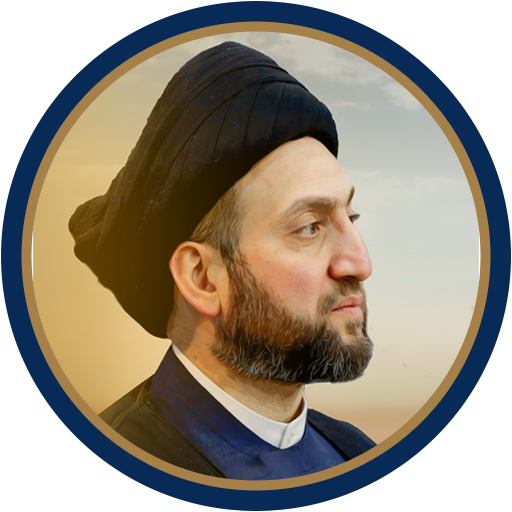
/6/1/photo_2025-03-09_09-53-10.jpg)
Sayyid Al-Hakeem in His Ramadan Lecture: Second Insight on "Virtue of Prayer" in Imam Zain Al-Abidin’s Epistle on Rights
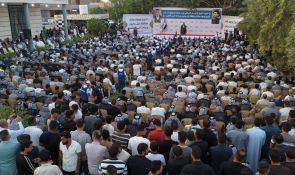
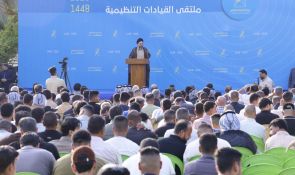
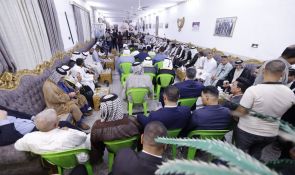
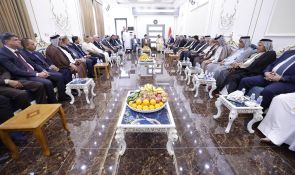
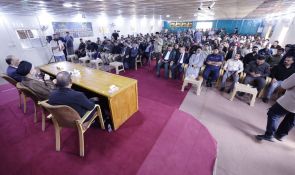
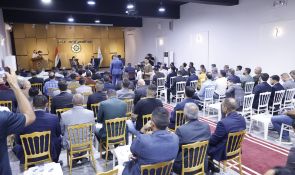
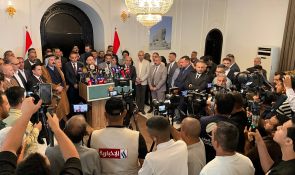
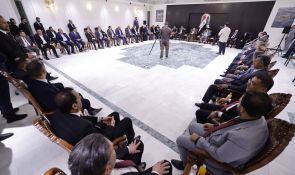
As part of his Ramadan lecture series, Sayyid Ammar Al-Hakeem, Head of the National State Powers Alliance, continued his discussion on Imam Zain Al-Abidin Ali bin Al-Hussein Al-Sajjad’s (peace be upon him) Epistle on Rights, further elaborating on the tenth right concerning the "Right of Prayer." In this lecture, H.E. focused on the second key insight, highlighting the immense virtue of prayer and its esteemed status in Islam.
H.E. emphasized that prayer is a fundamental pillar of faith and a standard by which all deeds are measured—if accepted, all other acts of worship are accepted; if rejected, the rest follow suit. H.E. also noted that prayer is the only form of worship that remains obligatory for a Muslim under all circumstances, except in specific situations, and that it was a consistent command of all prophets despite variations in its practice.
Citing Quranic verses that underscore the significance of prayer, H.E. referenced:
"And He has enjoined upon me prayer and charity as long as I live." (31:19 Holy Quran)
"And he used to enjoin his people to pray and give alms, and he was pleasing to his Lord." (55:19 Holy Quran)
"And enjoin prayer upon your family and be steadfast in observing it." (132:20 Holy Quran)
H.E. also explored pivotal moments from the life of Prophet Mohammed (peace be upon him and his family) and his purified household that reflect the centrality of prayer. Among these was the request of Imam Hussein (peace be upon him) on the eve of Ashura to delay battle so that he and his companions could engage in prayer, as well as his commitment to leading the Prayer of Fear during the battle itself.
Additionally, H.E. highlighted the advice of Imam Ali (peace be upon him) in Nahj Al-Balagha, where he urged his followers to uphold prayer as a means of drawing closer to Allah, affirming that it is a prescribed obligation upon believers. H.E. also recalled the words of Prophet Mohammed (peace be upon him and his family), who likened prayer to a cleansing spring that purifies a believer from sins, just as one who bathes five times a day remains clean.
H.E. further cited noble hadiths that illustrate the unparalleled merit of prayer, including Imam Jaafar Al-Sadiq’s (peace be upon him) statement that after faith, prayer is the most virtuous act by which a servant can seek nearness to Allah. H.E. also referenced the saying of the Prophet (peace be upon him and his family): "Prayer is a scale—whoever upholds it fully shall receive in full."
Concluding the lecture, H.E. quoted Imam Mohammed Al-Baqir (peace be upon him), who described prayer as the pillar of religion, comparing it to the central pole of a tent—if firmly established, the rest of the structure remains upright.