Sayyid Al-Hakeem from Wasit: Diversifying Economy, Consolidating Weapons under State Authority Two Pillars Confronting Current Challenges
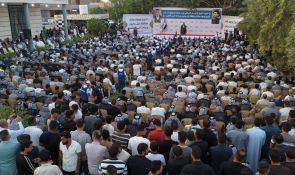
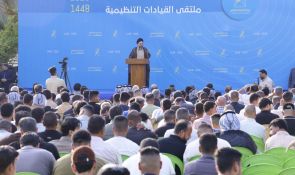
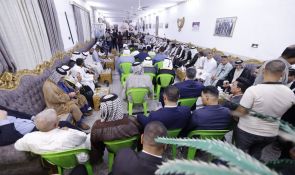
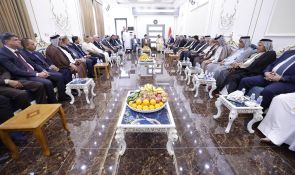
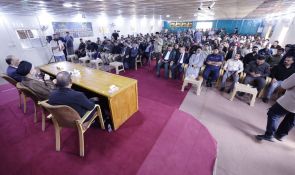
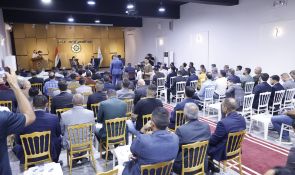
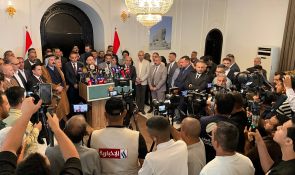
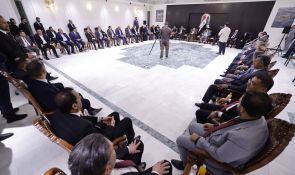
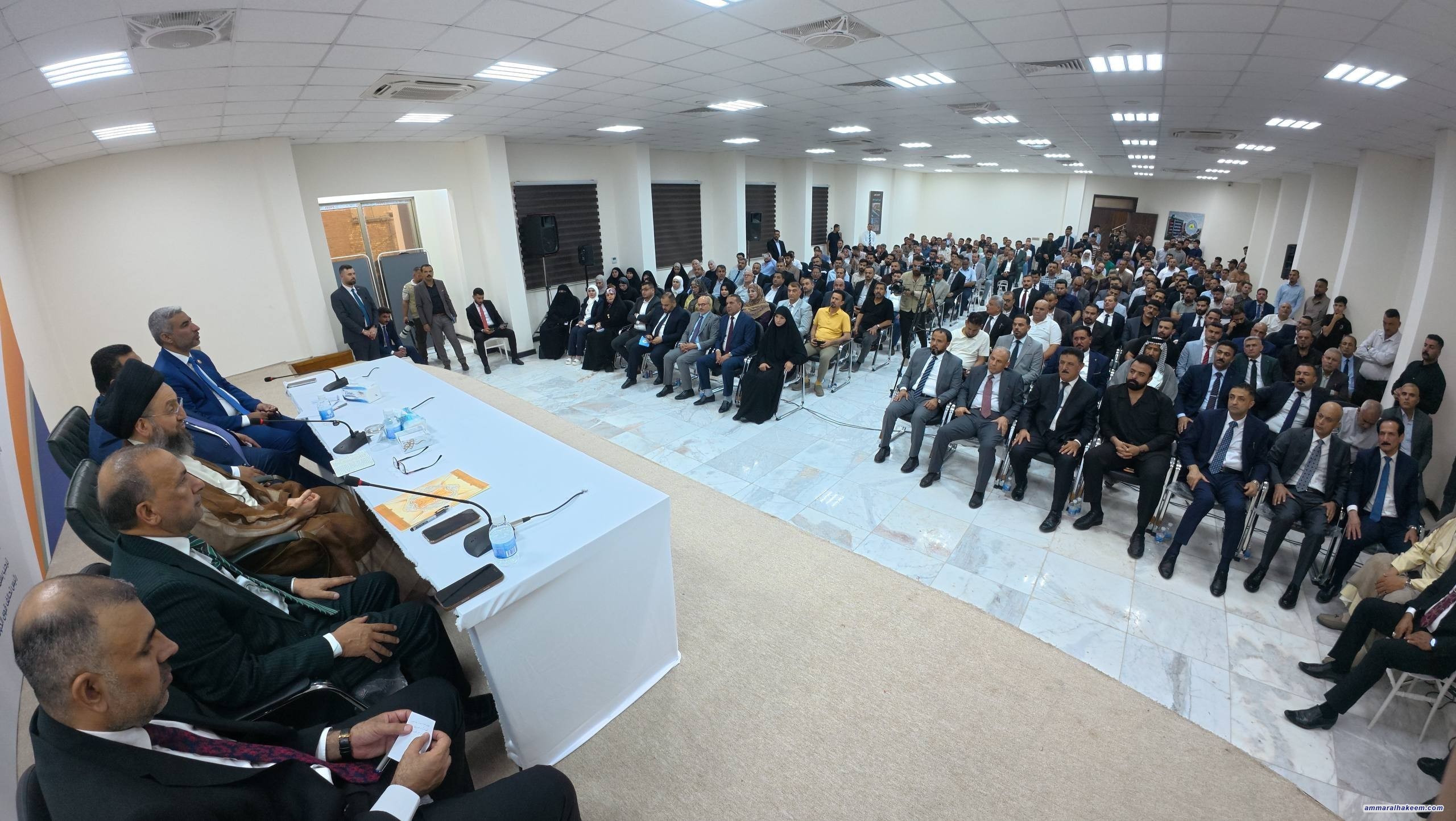
His Eminence Sayyid Al-Hakeem, Head of the National State Powers' Alliance, met during his visit to Wasit Governorate with a gathering of the governorate's elites and competencies, in a wide-ranging meeting that addressed multiple political, economic, and developmental files.
H.E. opened the meeting by recalling the deep history binding the Al-Hakeem family to Wasit Governorate, evoking the memory of Ayatollah Sayyid Mohammed Sadeq Al-Hakeem, Shaheed Al-Mihrab, the jurist of Ahl Al-Bayt Sayyid Mohammed Saeed Al-Hakeem, and Aziz Al-Iraq (may Allah sanctify all their souls), affirming that Wasit sits at the heart of Iraq and of hearts alike — the country's agricultural capital, an oil-rich governorate by distinction, and a commercial hub by virtue of its border crossing. H.E. also renewed condolences over the Speicher massacre, describing it as a heinous crime that left a bleeding wound, and classifying it as an act of genocide.
On the regional front, H.E. noted that Iraq has been affected and harmed by the succession of regional developments, pointing out that the ongoing war is unequal between its two parties — explaining that the measure of victory for the stronger party lies in achieving its objectives, while the victory of the weaker lies in preventing the stronger from reaching them. H.E. concluded that the region is moving toward a new Middle East that does not align with what others had envisioned.
On the domestic political front, H.E. affirmed that Iraq's parliamentary system requires the consensus of political blocs to produce constitutional entitlements, noting that Iraq succeeded in electing its three presidencies and forming its government within the constitutional timeframe, following consultations that led to the assignment of Mr. Ali Al-Zaidi. H.E. stressed that adherence by all to the constitution, the rule of law, and the peaceful transfer of power is a national necessity that admits no compromise. H.E. noted that Al-Zaidi possesses an economic and youthful background that qualifies him to lead the path of development, emphasizing that his success is Iraq's success and a source of prosperity for its people. H.E. also affirmed that consolidating weapons under state authority is an Iraqi demand and a firmly established constitutional reality.
On the economic front, H.E. warned of the repercussions of declining oil exports on revenues, calling for the diversification of crude oil export outlets and rejecting the tying of the people's fate to a single outlet. H.E. proposed reaching an understanding with Saudi Arabia to restore the Iraqi pipeline, repairing the pipeline toward Turkey, and constructing pipelines toward the Red Sea and the Mediterranean to diversify markets and link regional interests to Iraq. H.E. also held the elites responsible for confronting populist rhetoric that seeks to confuse the public scene.
H.E. stressed the necessity of diversifying sources of income and departing from the rentier state model by activating the sectors of agriculture, industry, tourism, investment, and modern technology, and working to remove oil from the budget and build it instead on the gross national product derived from productive sectors.
On education and the labor market, H.E. called for a reassessment of university outputs to align with labor market requirements, warning that graduating youth without absorbing them leads to disguised unemployment and a gap between specialization and employment.
H.E. closed by affirming the importance of political, media, humanitarian, and relief support to ease pressures and restore stability to the region, cautioning that what Iraq faces is more a water management crisis than a water crisis per se, calling for advance and meticulous planning, and demanding that the dues of farmers and contractors be paid on par with those of civil servants.