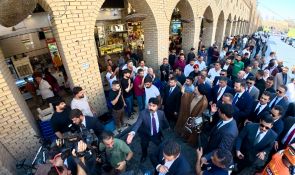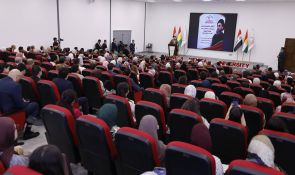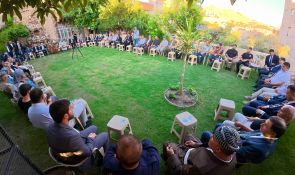
Sayyid Al-Hakeem Meets Local Government, Executive, Security Leadership during Wasit Visit
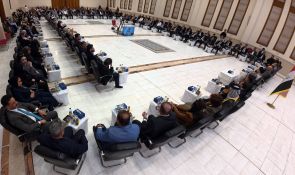
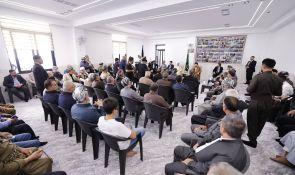
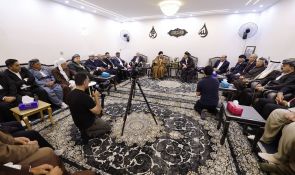
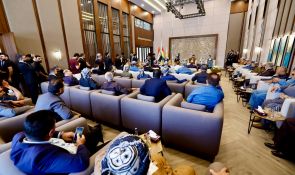
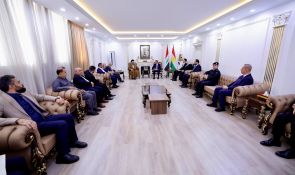
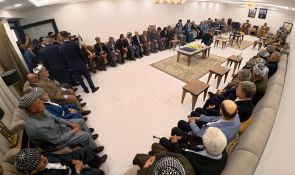
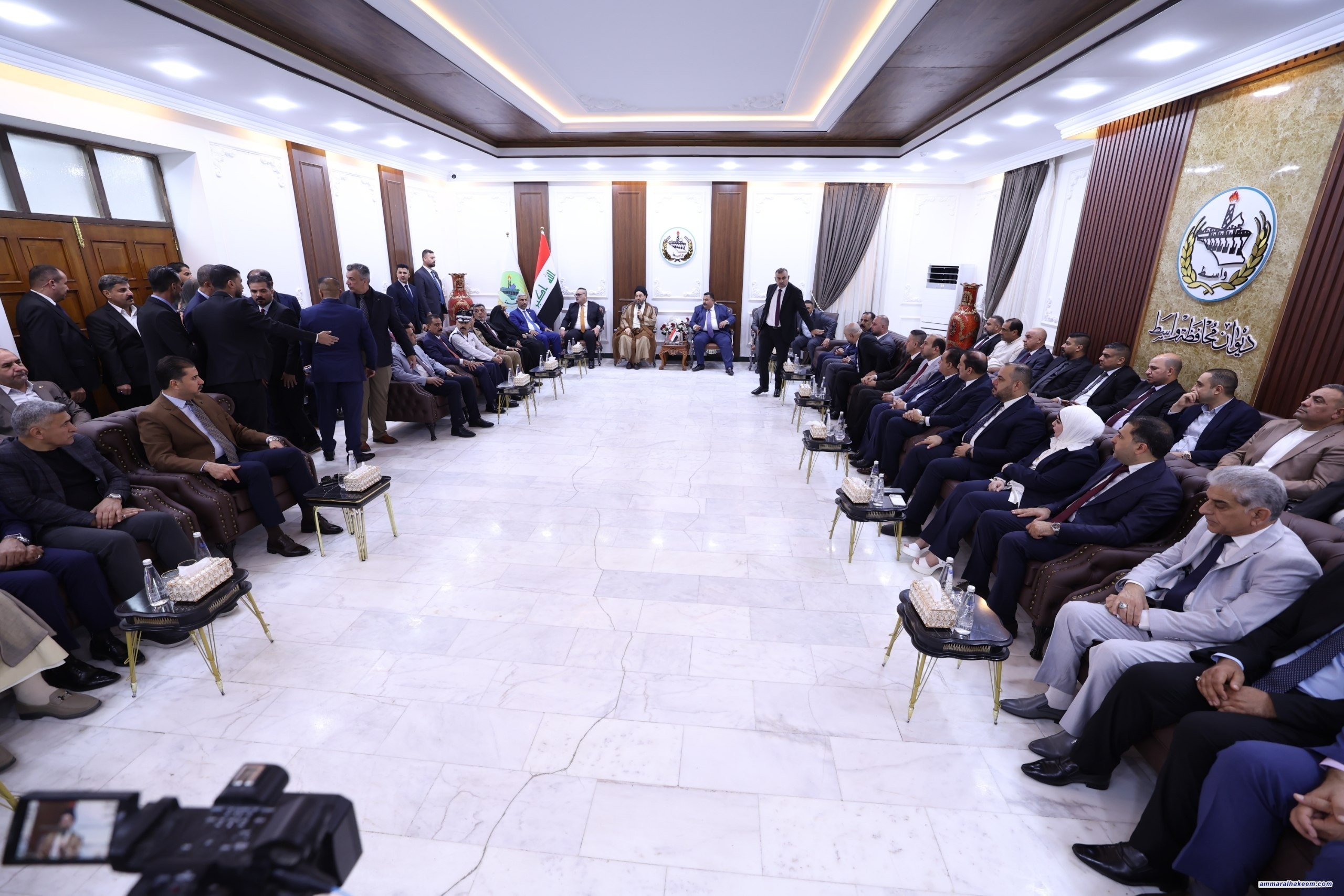
Wasit Governorate marked the third stop on His Eminence Sayyid Al-Hakeem's tour, Head of the National State Powers' Alliance, where H.E. met at the governorate's headquarters with Governor Ali Hassan Sulayman, his two deputies, Provincial Council Chairman Dr. Adel Mohammed Kazem, a number of members of Parliament representing the governorate, as well as Provincial Council members, heads of administrative units, and a number of directors of service departments and security commanders.
H.E. praised the historic role of Wasit Governorate, highlighting its agricultural, commercial, economic, oil, tourism, and tribal dimensions, and recalling the deep bond between Wasit and the family of the late Imam Al-Hakeem (may Allah sanctify his soul).
H.E. called for supporting Wasit and strengthening its internal cohesion, explaining that Iraq is going through exceptional circumstances imposed by the consequences of the war, which has halted oil exports and led to a decline in revenues. H.E. expressed hope for an end to the war and the reaching of an agreement between the two parties, noting that the recent escalation may itself serve as a catalyst toward such an agreement.
On the financial front, H.E. stressed the importance of understanding the current financial situation while maintaining salary disbursements as the highest priority, calling for attention to the needs of both farmers and contractors — explaining that farmers contribute to local production, create employment opportunities, and reclaim land, while contractors ease the burden on the government in employing the workforce in addition to executing projects that serve citizens. H.E. also affirmed the importance of supporting projects with high completion rates to prevent them from stalling.
H.E. noted that Iraq has overcome grave security and political crises, yet today's challenge is distinctly economic, calling for the diversification of the national economy through agriculture, industry, tourism, investment, and the utilization of modern technology, and stressing the importance of seizing this period to transition from a rentier state model to a productive and diversified economy.
H.E. pointed out that Iraq has moved past the political deadlock, which H.E. described as difficult and complex, having managed to elect the three presidencies and put forward more than one candidate for the position of Prime Minister under extremely challenging conditions, culminating in the assignment of brother Al-Zaidi. H.E. noted that the peaceful transfer of power in Iraq represents a remarkable phenomenon at both the regional and historical levels.
H.E. closed by calling for the achievement of justice and sound management of public funds according to priorities, expressing hope for the passage of the Governorates Law, which would grant local governments legislative powers and greater latitude in managing their financial revenues. H.E. renewed his support for Wasit, affirming that the current financial crisis is not new and that Iraq will overcome it, as it has overcome what was more difficult, by the will of Allah Almighty.