Sayyid Al-Hakeem: Current Crisis Opportunity to Abandon Rentier Economy, Build Productive Economy
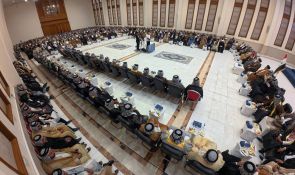
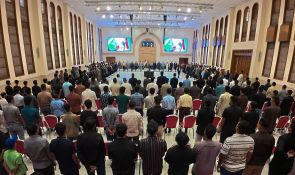
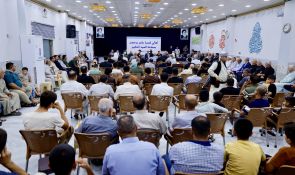
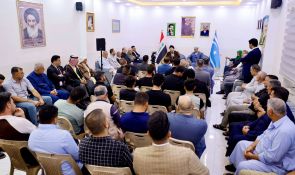
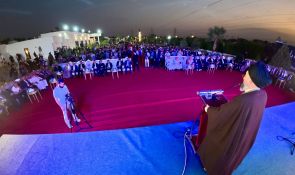
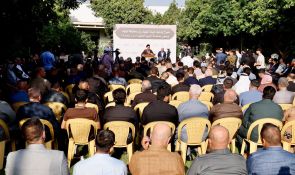
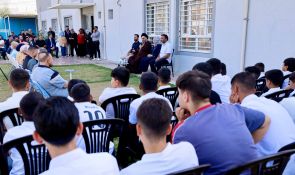
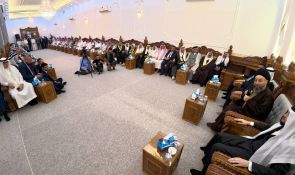
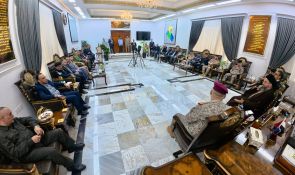
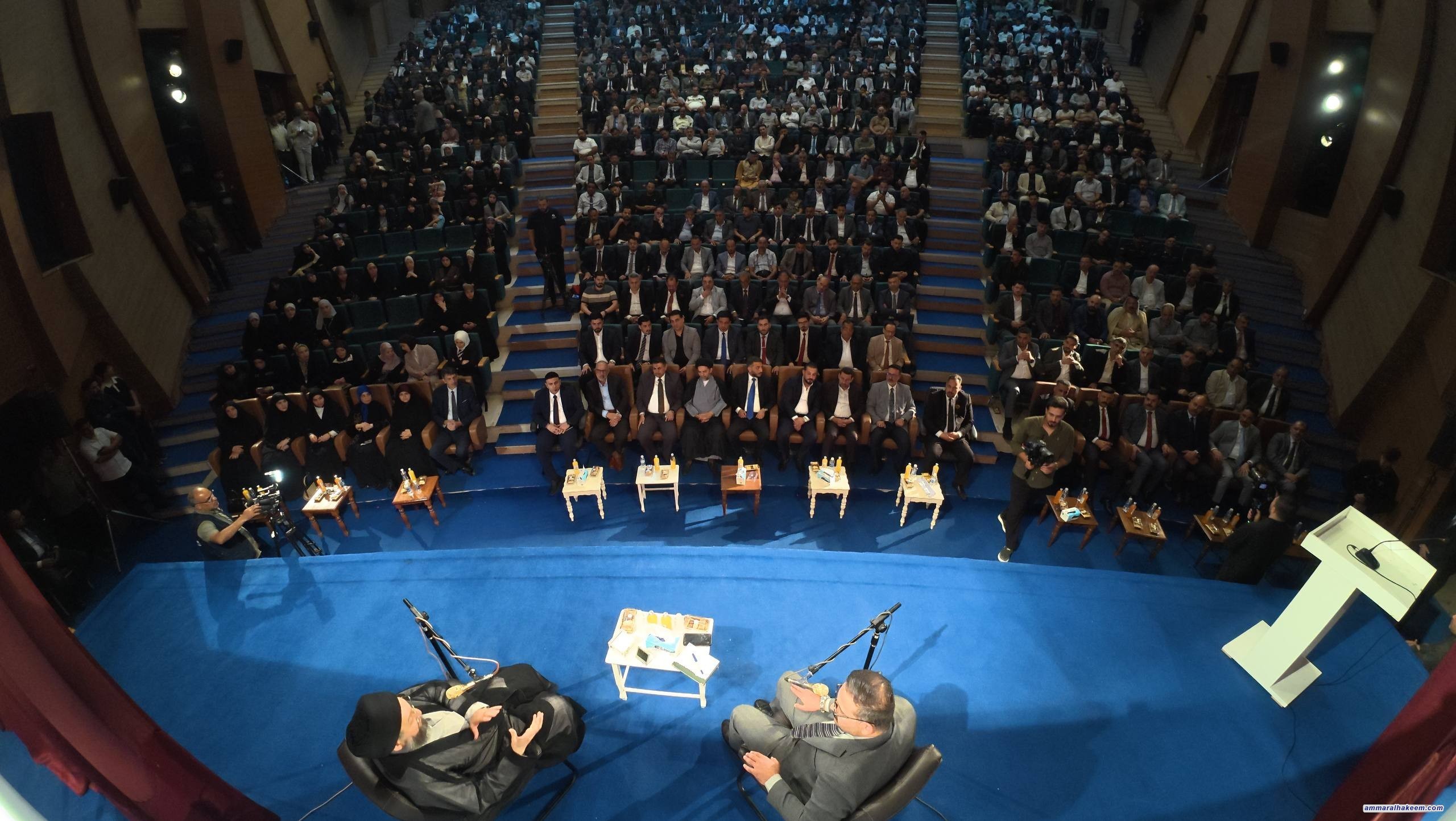
His Eminence Sayyid Al-Hakeem, Head of the National State Powers' Alliance, met with a large gathering of elites and competencies in the Holy Najaf Governorate, extending his blessings on the auspicious Eid Al-Ghadeer and affirming that Iraq is experiencing a peaceful transfer of power in accordance with constitutional timelines — from the election of the Speaker and the President of the Republic, to the Coordination Framework's selection of its three candidates, the last of whom being Mr. Al-Zaidi, who succeeded in forming his government before the expiration of the constitutional deadline.
H.E. stressed that solidarity with the blocs that were unable to present candidates at the government's voting session was a national stance, clarifying that consolidating weapons under state authority does not mean the demobilization of fighters, but rather the disengagement of the Commission from any political powers. H.E. commended the steps taken in this direction, while noting that some factions have deferred this to the coming September, pending a position on the conclusion of the international coalition's mission in Iraq.
H.E. Sayyid Al-Hakeem affirmed that taking on the Ministry of Finance was a challenge for the National State Powers' Alliance amid the financial crisis resulting from the halt of oil exports, explaining that Iraq needs a period of time to restore its exports and that the Alliance presented a competent and specialized figure despite the severity of the crisis. H.E. called on elites to acquaint the public with the scale of the challenge. H.E. also stressed the necessity of diversifying export outlets through the Red Sea and the Mediterranean, and renegotiating the Iraqi pipeline in Saudi Arabia as a national imperative.
H.E. called for ending the rentier economy and single-source income dependency, and for seizing the current phase to pursue root remedies through developing the refining industry and activating productive sectors such as agriculture, industry, tourism, modern technology, and investment. H.E. affirmed the importance of restoring confidence with others to encourage their entry into the Iraqi market, and of investing human capital in the field of modern technology.
H.E. praised the efforts of the local government in the Holy Najaf Governorate in addressing the housing crisis and providing employment opportunities, citing the experience of Al-Salam City through the distribution of serviced land plots, and expressed hope for the enactment of a governorates law that grants local governments broader powers. H.E. affirmed that the presence of oil fields and the border crossing with the Kingdom of Saudi Arabia will enhance Najaf's prospects for construction and development. H.E. also noted that Al-Hikma National Movement has produced successful young models that have become a source of admiration and emulation, and that the Prime Minister is himself a young figure.
H.E. Sayyid Al-Hakeem stressed the importance of digitization, governance, automation, and departing from bureaucratic routine to reduce corruption, increase transparency, and facilitate services, explaining that the decline in financial liquidity renders some demands deferred. H.E. called for activating the market, the private sector, and small enterprises to absorb unemployment, and for learning from the experiences of others and being candid with the public about the financial reality and the steps being taken. H.E. also called on elites to present practical solutions and projects that create success stories, affirming that the crisis is at its core a crisis of management, and expressing regret over the absence of modern management science from the interests of youth and students when choosing their fields of study.