Sayyid Al-Hakeem Stresses Obligating Foreign Companies to Provide Jobs, Modern Technologies Training for Iraqi Labor
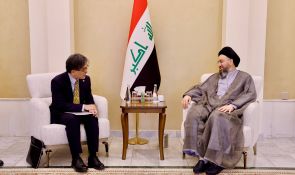
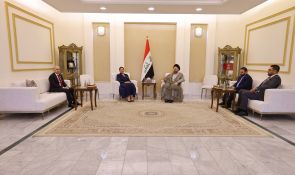
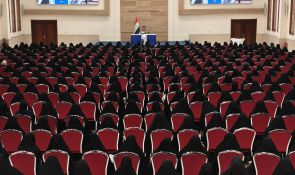
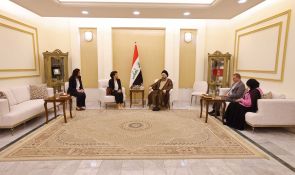
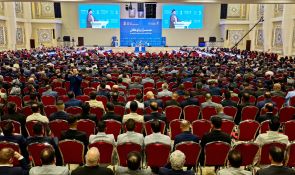
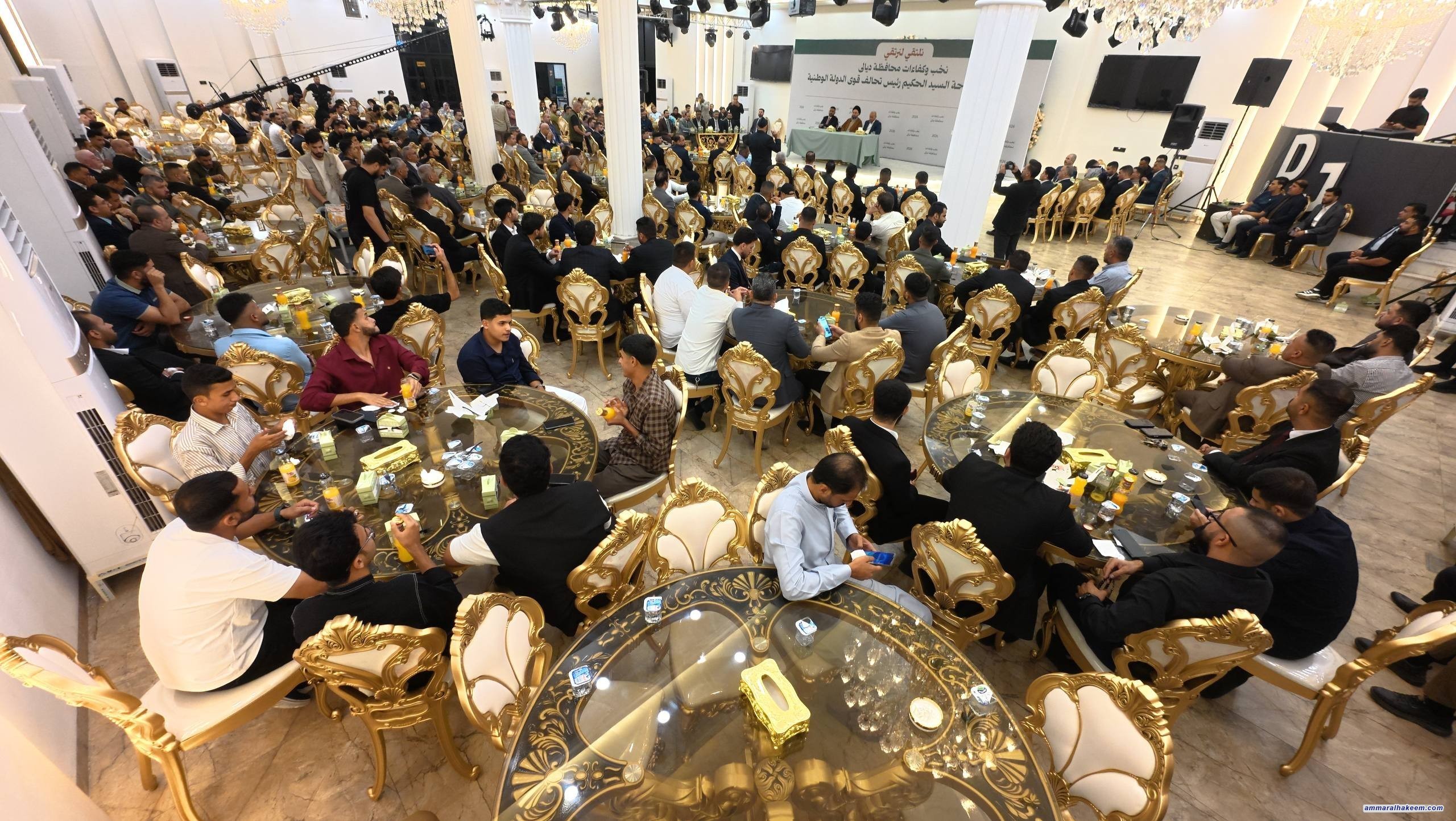
At the conclusion of the first day of his tour of Diyala Governorate, His Eminence Sayyid Al-Hakeem, Head of the National State Powers' Alliance, met with a gathering of elites and professionals in the governorate from various specializations, explaining that the visit to Diyala comes to connect with the people of the governorates and their local governments in a social spirit, while dedicating effort to solving problems and seeking to meet demands with the available capabilities. H.E. called for informing the elites of the circumstances of decision-making and the reasons behind it, clarifying that not knowing the reasons leaves the elites unenthusiastic about supporting government paths.
H.E. affirmed that the current challenges are economic, and that they contributed to the selection of Prime Minister Al-Zaidi as an economist with experience in the private sector and familiarity with the administrative reality and its complexities, explaining that the challenges were previously security, political, and social.
H.E. explained that the government's priorities in the economic sector are increasing oil production in proportion to Iraq's capabilities, its population, and its need for funds to launch construction and reconstruction campaigns, affirming the government's direction toward doubling production through foreign investments by specialized companies. H.E. made this conditional on understanding the need for investment and its role in the renaissance of nations, stressing reflection on the role of investments in the renaissance of the countries surrounding Iraq, warning against populist rhetoric that confronts government paths in seizing opportunities, holding the elites responsible for clarifying the nature of the positions, and cautioning against those with agendas who seek to set Iraq back and prevent it from investing its potential.
H.E. affirmed the government's priority of diversifying Iraq's oil export outlets through a pipeline network toward the Red Sea and the Mediterranean, explaining that Iraqi oil has suffered from fluctuating production and exports and from falling prices due to the danger of navigating the Gulf basin and the Strait of Hormuz. H.E. called for utilizing the ports of the countries surrounding Iraq to diversify outlets, clarifying that diversifying export outlets provides flexibility in exporting and targets new markets, and strengthens Iraq's standing in international markets and its interests and partnerships, and thus the political support for Iraq and its stability, while warning against complacency in constructing the pipelines after the Strait of Hormuz crisis ends.
H.E. stressed diversifying the economy and freeing it from the rentier state model, dedicating oil revenues to strategic projects and a future generations fund, and called for diversifying the economy by activating productive sectors such as agriculture, industry, tourism, investment, and modern technology, stressing the importance of launching the plans necessary to achieve these goals. H.E. pointed out that ending the International Coalition's missions in Iraq is a message of recovery for Iraq and an international recognition of its stability, calling for taking the challenges of post-Coalition Iraq into account, stressing the reassurance of the components and the sending of the necessary messages, and cautioning against any step that contributes to disturbing the social fabric, and called for rejecting any sectarian orientation or rhetoric.
H.E. clarified the nature of the security challenge after the end of the International Coalition's missions in Iraq, stressing the importance of filling the intelligence vacuum left by the end of the Coalition's missions, and calling for uncovering the dormant terrorist cells lying in wait for an opportunity and confronting them, with a high level of focus. H.E.
stressed the importance of reassuring investors and convincing them of Iraq's stability so that they seize the promising opportunities it offers in all fields, noting the necessity of proceeding with the project to address the problem of weapons outside the framework of the state, so that it includes any weapon outside the framework of the state and from all parties, and commended the factions' efforts in protecting Iraq in a previous phase.
H.E. regarded terrorism as an intellectual problem before being a security one, calling for addressing the problem at its roots and for enacting laws to deal with this intellectual problem that harms society and its stability and unity, explaining that Iraq has made efforts to bring the viewpoints of the region's rival parties closer.
H.E. affirmed that the government's current priority is securing essential expenditures such as salaries, basic services, and support for farmers and contractors, explaining that financial scarcity has imposed an equation of priorities on the government, stressing attention in a balanced manner to the files of youth and sports, and calling for implementing the terms of contracts with foreign companies in terms of job opportunities and training Iraqi labor on the latest scientific technologies.