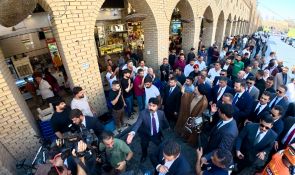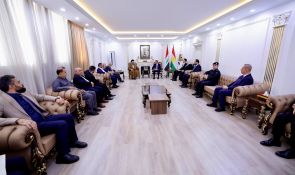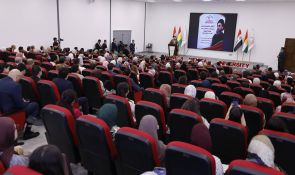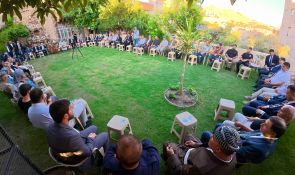
Sayyid Al-Hakeem Meets Anbar Cultural Center Academic Elites
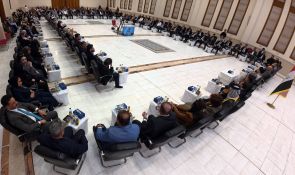
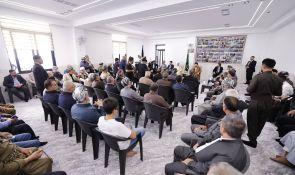
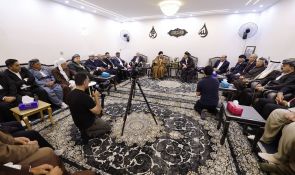
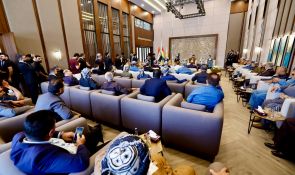
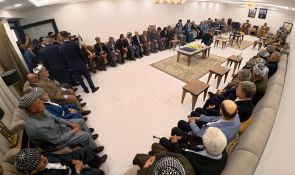
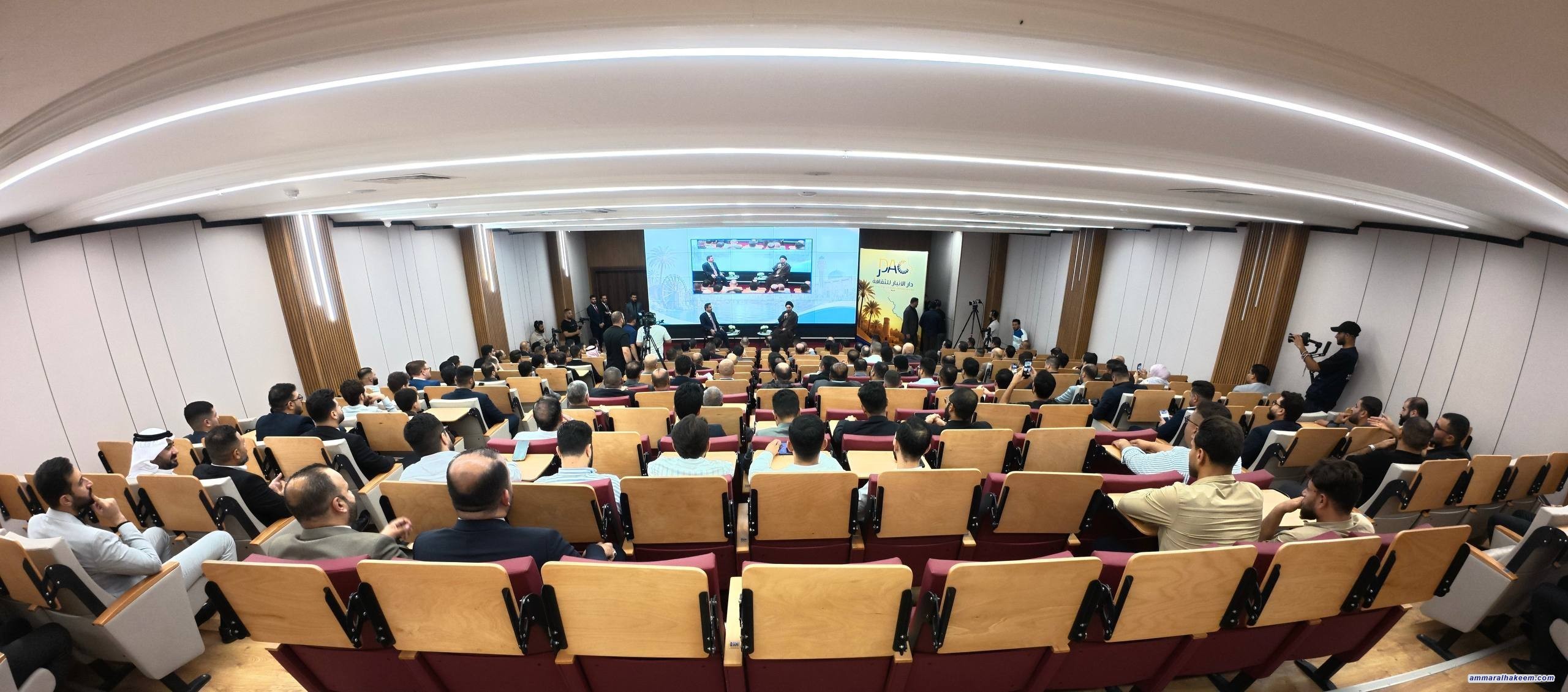
At the Anbar Cultural Center at Al-Ma'arif University, His Eminence Sayyid Al-Hakeem, Head of the National State Powers' Alliance, met with a number of Anbar's elites and qualified figures, and said that Iraq had gone through a social challenge and inter-component friction, and that despite succeeding in overcoming this challenge, psychological repercussions still remain, affirming that Iraq has left behind the phase of political alignments based on ethnic or sectarian grounds, as positions are no longer shaped along component lines, and political powers now move closer to or further from one another based on political differences, noting that this paves the way for cross-component powers oriented toward the national space, and for multiple electoral lists structured vertically to represent all components, and that we are close to achieving this goal, with the idea becoming increasingly accepted, stressing the importance of public relations in promoting the Iraqi experience and Iraqi reality.
H.E. stressed the state's monopoly over weapons, noting that Iraq had gone through difficult circumstances, including the challenge of terrorism, where these groups were able to mobilize after having shed blood in defense of Iraq — a situation not unique to Iraq, but one shared by all countries that went through similar experiences, as Iraq is no exception, adding that the decision of war and peace rests with Parliament under the Iraqi constitution, noting that targeting neighboring countries negatively affects Iraq's relations with its regional surroundings, affirming that consolidating weapons under state authority is an Iraqi national necessity by Iraqi standards, a call from the Marja'iyya, and common ground among all government programs.
H.E. affirmed that fighting corruption is the responsibility of the state and its institutions, noting that the final word rests with the judiciary in ruling on all cases, and said: "Political blocs are to be blamed if one of their members steals on their behalf, or if they cover up corruption despite it being proven; we have affirmed that the Coordination Framework strongly supports the fight against corruption," stressing the need to strike at major figures without favoritism, renewing the call for public prosecution without exception, explaining the importance of protecting the Iraqi currency and providing alternative solutions to secure liquidity, and calling for leveraging this challenge to arrive at substantive remedies for the Iraqi economy through diversifying sources of income, by activating productive sectors such as agriculture, industry, tourism, investment, and modern technology, as well as diversifying oil export outlets and linking the interests of neighboring countries with the Iraqi economy, thereby ensuring that all parties are invested in Iraq's stability.
H.E. called for the return of displaced persons, saying that most of the displaced live in the large cities surrounding their home areas, raising the question: if there is a security flag on them, how are they permitted to reside within these cities? He noted that security agencies hold data on wanted individuals, calling for easing concerns and removing certain considerations that hinder the return of the displaced, pointing to the importance of actually disbursing compensation to those entitled to it, as compensation cannot be halted on the grounds that manipulation exists in some cases, affirming the need to resolve compensation matters in the upcoming budget and clear the backlog of cases in preparation for moving into a new phase.
H.E. noted that Mr. Al-Zaidi had spoken publicly about the economic partnership with the United States, pointing out that this matter was among the provisions of the Strategic Framework Agreement with the United States, which was passed by Parliament with a two-thirds majority, adding: "The Prime Minister plans to raise oil production, thereby maximizing revenues, which requires major investments and necessitates forming economic partnerships with the regional and international community."