/14/3/photo_2025-10-15_10-27-27.jpg)
Sayyid Al-Hakeem: Iraq’s Resilience, Majority’s Sacrifice Fruit, and the Path of Moderation in Times of Crisis
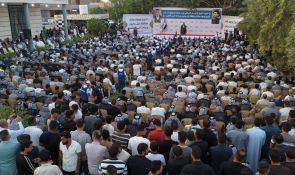
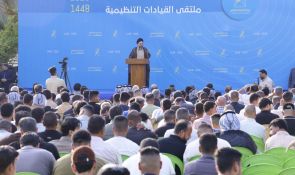
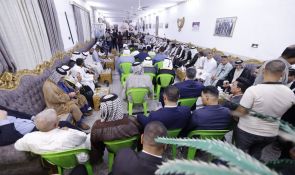
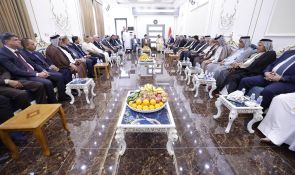
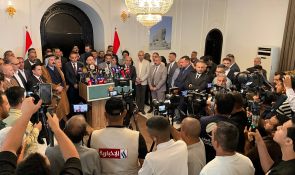
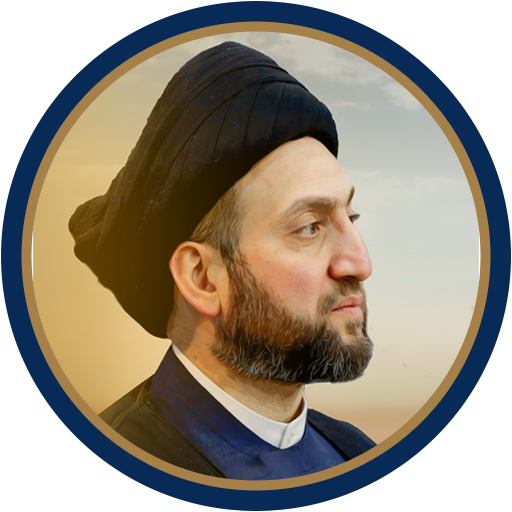
During his visit to Babil Province, Sayyid Ammar Al-Hakeem, Head of the National State Powers' Alliance, met a gathering of sheikhs and dignitaries from the Bani Muslim tribe and the tribes of Al-Kifl District. During His Eminence’s speech, he spoke about the challenges faced by the region and Iraq’s pivotal role amid these circumstances, affirming that the crises Iraq has endured would have caused the collapse of many other nations. H.E. attributed Iraq’s endurance to Allah’s grace, the guidance of the Supreme Religious Authority, the wisdom of moderate leaders, and the steadfastness of the Iraqi people.
H.E. explained that Iraq has successfully overcome security, political, and social challenges and thwarted numerous plots against it, noting that the country’s largest social component bore the greatest share of these burdens.
H.E. rejected the distortions and misrepresentations directed against this component, emphasizing that its conduct and balanced approach during times of crisis were what preserved Iraq, through the blood of its martyrs who sacrificed their lives in its defense. “Belonging to the Master of Martyrs,” H.E. said, “is an honor for this component, and these achievements must be protected and preserved.”
H.E. pointed out that the most pressing challenge today lies in essential services “water, electricity, education, health, and infrastructure” stressing that progress in these areas would create job opportunities and serve as the key to resolving both the economic and financial crises. H.E. emphasized that success in this field must parallel the successes Iraqis achieved in other domains, noting that true patriotism grows stronger through service to citizens and through the people’s connection to their homeland and its political program.
H.E. further stated that the 2025 elections are as significant as those of 2005, the latter laid the foundation for democracy, while the upcoming ones will establish sustainable stability. H.E. said that achieving this requires wise choices of competent and honest national figures. H.E. also underscored the importance of adopting developmental projects for the central and southern provinces, noting that while some have already advanced, others are on the path toward progress. H.E. concluded by renewing the call for broad, active, and informed participation in the elections, and for continuous engagement with the public to ensure an informed and unified national course.