/3/1/photo_2025-05-03_13-51-36.jpg)
Sayyid Al-Hakeem: Al-Hikma Project Rises, Draws Strength from Moderation, National Responsibility
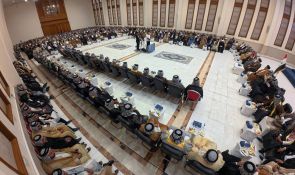
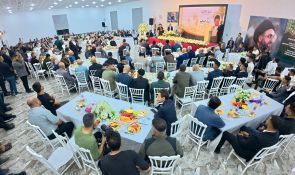
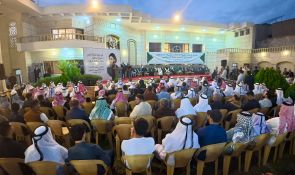
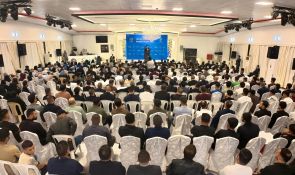
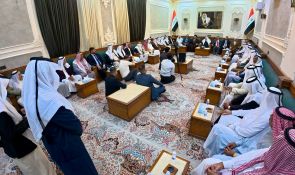
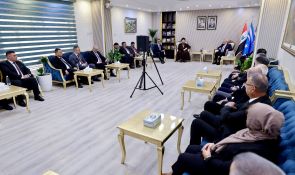
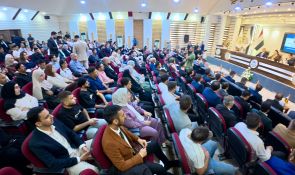
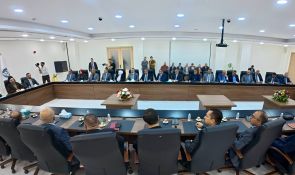
During a meeting with a group of organizational leaders of Al-Hikma National Movement in Najaf, Sayyid Ammar Al-Hakeem, Head of the National State Powers Alliance, affirmed that Najaf—renowned for its scholarly and spiritual significance—is the resting place of prophets and successors, and a vital starting point for the reformist movement rooted in Islamic values and allegiance to the Awaited Imam (may Allah hasten his reappearance).
His Eminence stressed that all political and social efforts must be undertaken with the intention of seeking closeness to Allah Almighty and His guidance. H.E. noted that connection to Imam Al-Mahdi (may Allah hasten his reappearance) brings blessings to one’s work and places a greater responsibility on those involved. “Our goals and initiatives,” H.E. said, “should be viewed as part of the groundwork for that divine project. Every success is divine favor, and even setbacks may carry hidden blessings. In both cases, we must give thanks.”
H.E. highlighted that the Al-Hikma Movement is defined by five key characteristics that have positioned it as a rising force in Iraq’s political landscape: patriotism, moderation, youth leadership, institutional structure, and grassroots engagement. These are not mere slogans, H.E. emphasized, but values that have been translated into action through outreach tours, youth empowerment initiatives, and citizen-focused programs.
H.E. called on Al-Hikma members to take pride in the movement, deepen their understanding of its vision, and communicate it clearly and positively to society. “Each of you,” H.E. stated, “is a leader within your own sphere of influence.”
H.E. also noted that political competition should never turn into hostility, pointing out that the real adversaries are despair and indifference. These must be countered with determination and a sense of national responsibility.
In closing, H.E. underscored that lasting political stability can only be achieved through moderation and balance—principles that lead to security, followed by development, economic growth, and stronger regional and international ties, ultimately fulfilling citizens' aspirations and enhancing public confidence in political performance.